West Side
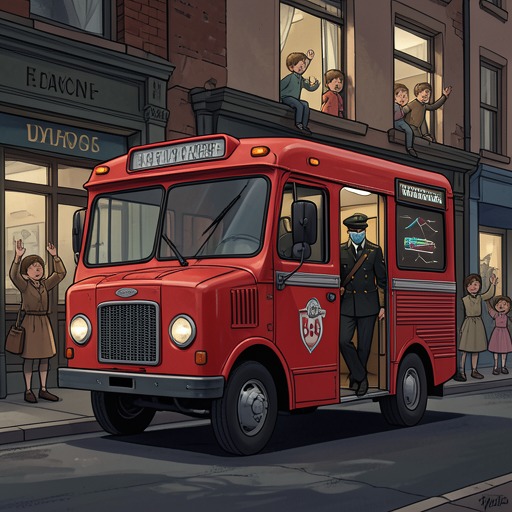
Mr. MercedesWest Side is the area Brady Hartsfield uses as cover for surveillance of K. William Hodges. Its everyday traffic—especially the children buying ice cream after school—lets Brady appear to be an ordinary vendor, while the neighborhood’s streets bring him close to people connected to Hodges. The location’s significance lies in this double life: a working district on the surface, and a convenient field for Brady’s hidden purpose.
Setting and Daily Activity
Brady reaches West Side after driving slowly in his company truck, observing every speed limit because getting caught speeding after school lets out could cost him his job. The trip takes about forty minutes, but the delay is part of maintaining his ordinary appearance. Once there, he cruises the neighborhood streets until dusk begins to fade the late-spring sky.
His customers include schoolchildren arriving between three and six in the afternoon, many carrying backpacks and crumpled dollar bills. Most are absorbed in their friends or phones and barely notice him; some thank him, but many do not. Brady prefers it that way. As the vendor in a white uniform, he is unremarkable—and being neither looked at nor remembered is useful to him.
Routes and People
The neighborhood’s residential streets also take Brady past the house on Teaberry Lane where Jerome Robinson lives with his parents and younger sister. Brady’s view of Jerome is colored by resentment: Jerome works for Hodges, is good-looking, and dates women Brady considers attractive. Brady’s hostile judgment of those relationships reveals his prejudice; it does not establish anything about Jerome or the women themselves.
Brady’s work gives him more than one means of moving through the area. He drives the Mr. Tastey ice cream truck and sometimes uses a Cyber Patrol Volkswagen on service calls. These ordinary routes allow him to be present in the neighborhood without making his attention to Hodges obvious.
Concealment and Narrative Significance
Brady regards his arrival in Hodges’s neighborhood as the useful part of the drive: there, he has a legitimate reason to be. He relies on the principle of hiding in plain sight, turning the routine of work into cover for surveillance. West Side is therefore not merely a backdrop but a practical advantage, where the same familiar streets support both his public role and his private objective.
That contrast shapes the location’s narrative function. For children, the truck is part of an after-school routine; for Brady, their inattention confirms how easily he can pass unnoticed. The ordinary neighborhood becomes an instrument of concealment, bringing his covert pursuit of Hodges into the texture of everyday life.